

IRIS CERAMICA GROUP AT CASA DECOR


For the new edition of Casa Decor 2026, Iris Ceramica Group presents an architectural project that enhances the expressive strength of ceramics – a material that blends history and innovation – bringing life to a creative dialogue between architecture and interior design, history and contemporary taste.
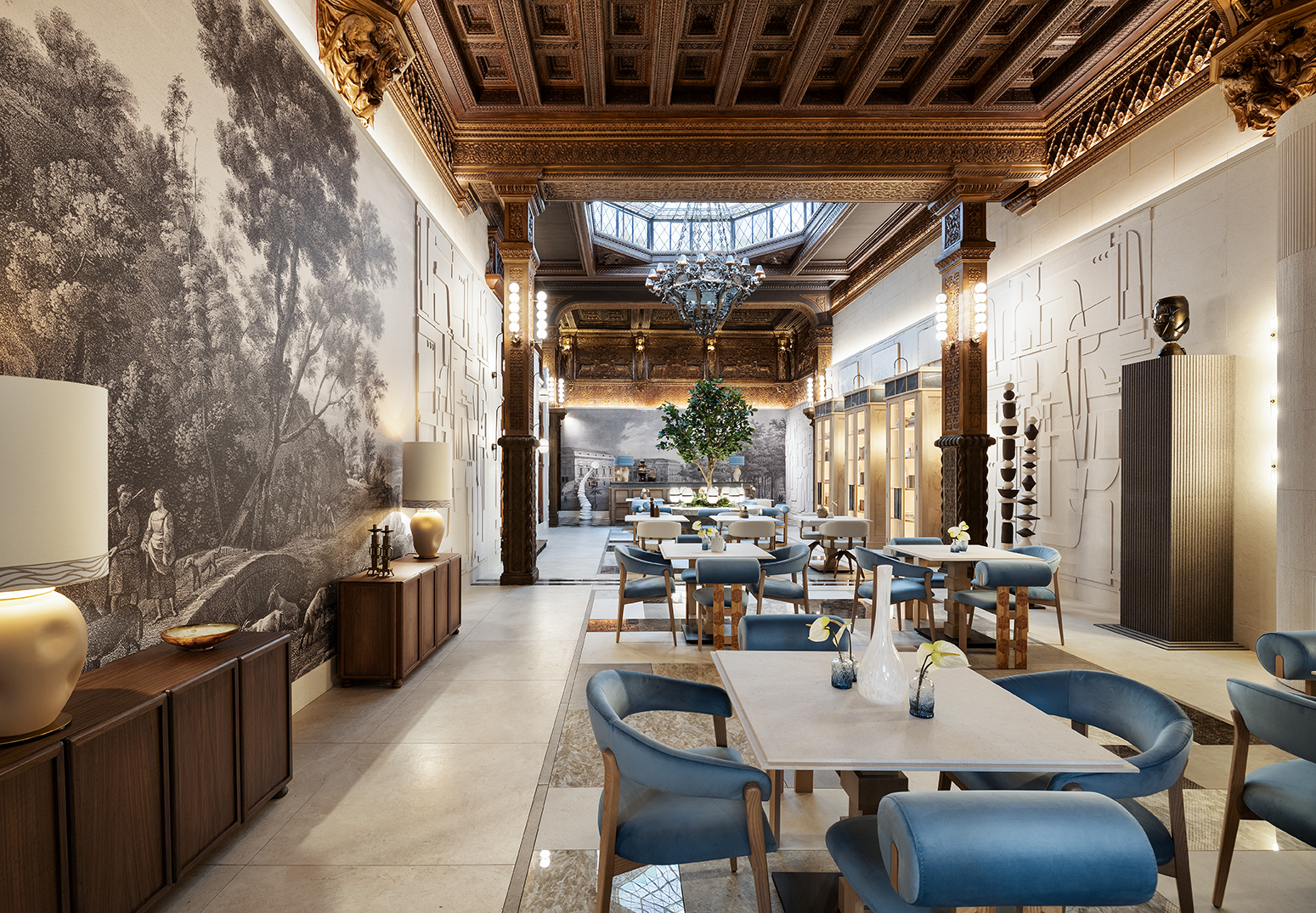
Raúl Martins, the interior designer behind the project, has turned the deconsecrated chapel in the ancient Palazzo in Calle San Agustín, into “The Silent Chapel” restaurant, with a sensitivity for history and matter that respects the history of the place, giving it a new interpretation that is both contemporary and traditional at the same time.
Ceramics are used as a tailored suit in both the architectural design of the coverings and the bespoke furnishing elements, blending the craft design of wood, thanks to the skill of the technical partner Mogno Woods: the Galician carpenter who brought the soul of natural material together with ceramics.
| THE SILENT CHAPEL |
The building hosting the 2026 edition of Casa Decor was built between 1892 and 1895 as the home of the Marquises of Los Vélez and the Counts of Niebla, with the architectural language of the city homes of the period. In 1926, after being sold, the building was turned into a school and convent, and the original carriage stables were converted into a church. The chapel – now deconsecrated – is one of the most attractive spaces in the building, due both to its Spanish neo-Renaissance style and the large glass ceiling that brings natural light into the space, creating an intimate and cosy atmosphere.
The rectangular 164 sq.m. room has a particularly welcoming appearance that makes it ideal as a restaurant. The use of Iris Ceramica Group ceramic surfaces, chosen in their most classical beauty, bring a new appeal to the space that neither overwhelms nor replaces the original architecture but rather envelopes it with respect, open to dialogue between the history of the place and its renovations.
Raúl Martins’s project introduces an essential language that allows the original design to breathe and shine through. The historical elements have been conserved and the contemporary materials are layered over the history, redefining the space without changing its essence.
Past and present live side by side in “The Silent Chapel” restaurant, and are crowned by the classical and natural-inspired ceramic surfaces of Iris Ceramica Group, mixing different patterns, such as the mosaic flooring, perspectives, mix&match and geometric shapes. Ceramics are key features of both the architectural design – covering the floors, columns and chimney – and the design of the bespoke furnishing elements created in partnership with Mogno Woods. Blended with wood, the ceramics create original cupboards and tables, a sophisticated bookcase and the desk bar/reception: unique objects that – consistently with the whole project – narrate this meeting of history and innovation, blending the texture of wood with that of ceramics, in an innovative sensory and aesthetic experience.
One special high-impact effect is achieved by the surfaces of Sapienstone – the Iris Ceramica Group brand distributed in Spain by Cupa Stone – used for the furnishing elements in the reception area.
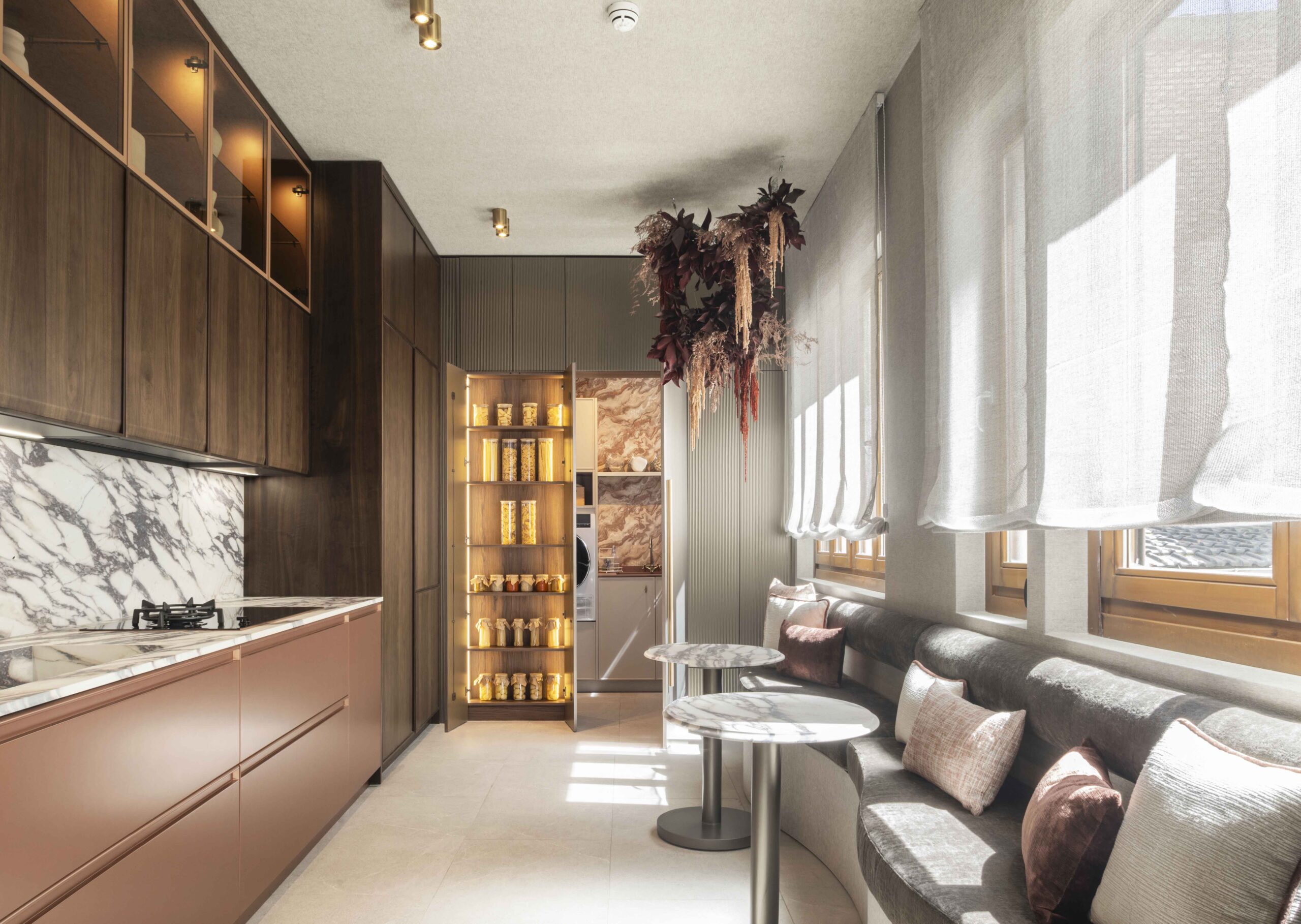
The desk in the bar area and the kitchen are covered respectively with the surfaces Jatoba Brown 4D Lapped, 20mm thick, and Calacatta Aureo 4D, in Cashmere finish, 12mm thick.
The materials used assure perfect continuity for the whole project, demonstrating the versatility of ceramics and their ability to express tradition and innovation, craft skill and contemporaneity, blending into any architectural and interior design story.
Through this tailor-made project for Casa Decor 2026, Iris Ceramica Group confirms its role as a key interlocutor in the design world, presenting ceramics as a material that can connect the past with contemporary design, contributing to defining new architecture and interior design scenarios.
| OTHER SURFACES IN THE EXHIBITION |
In addition to “The Silent Chapel”, Iris Ceramica Group surfaces can be found in other exhibition areas at Casa Decor 2026, creating a multi-space narration through different design contexts and languages.
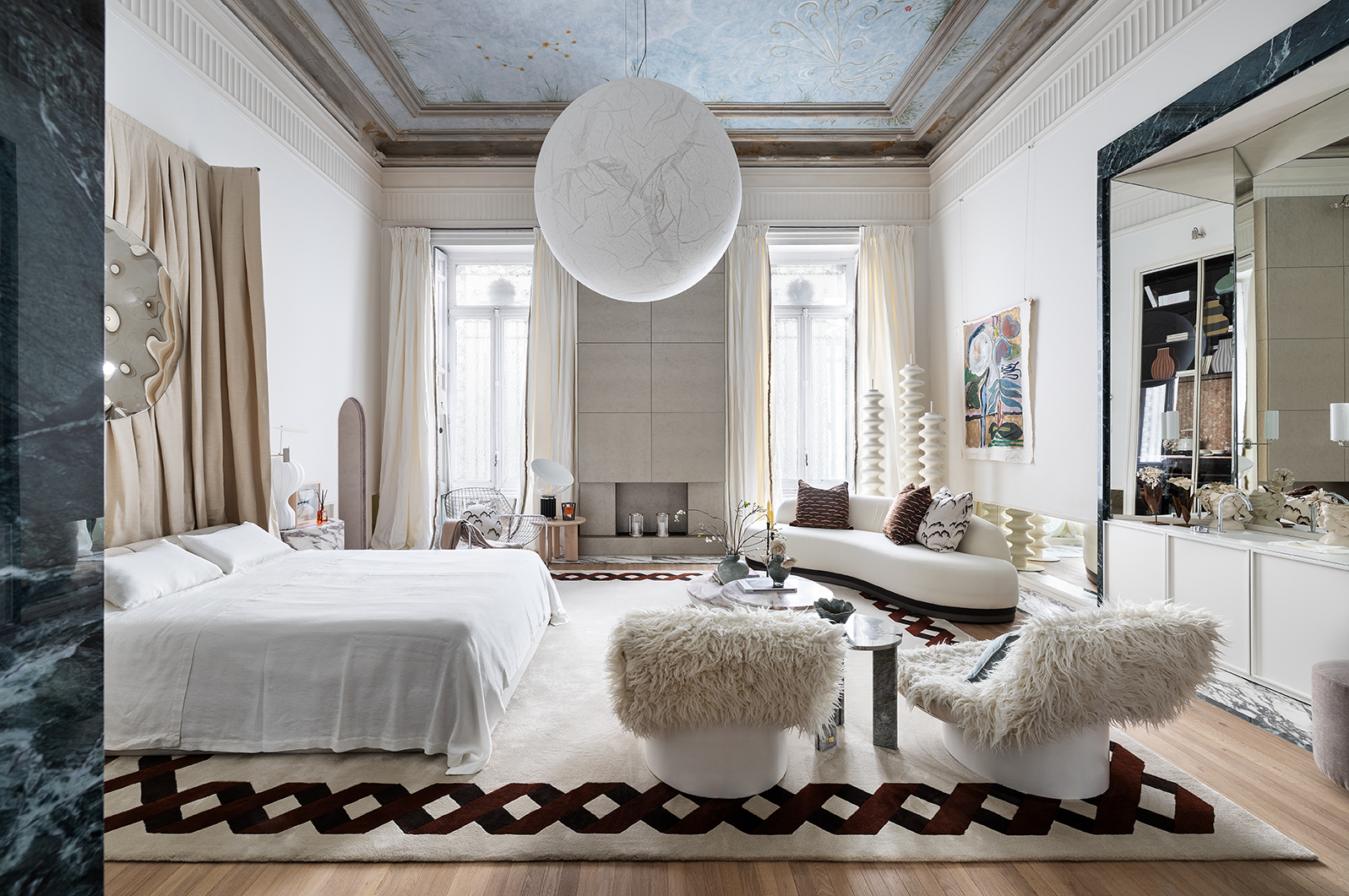
In the ITA – Italian Trade Agency space “Orbita e Materia”, designed by the firm Rebuelta Domecq, the Sapienstone surfaces Fior di Viola cover the bedside tables and are also used on the floor to define the project’s palette of textures. The composition is enhanced by Alpi Chiaro Venato Polished produced by the brand Fiandre for the perimeter frame on floor and the door profiles, while FMG Fabbrica Marmi e Graniti’s Onice Rosa Polished envelopes the whole bathroom, on the floor and walls, creating an immersive and perceptive atmosphere.
In the “Arquitectura del sabor” kitchen by Mar Gausachs for the Bauhaus space, two Sapienstone surfaces define the colour palette: Fior di Viola 4D in Cashmere finish covers the work top, while the sink is made in Marsala RedNatural, transforming the kitchen from a functional space to an architectural element.
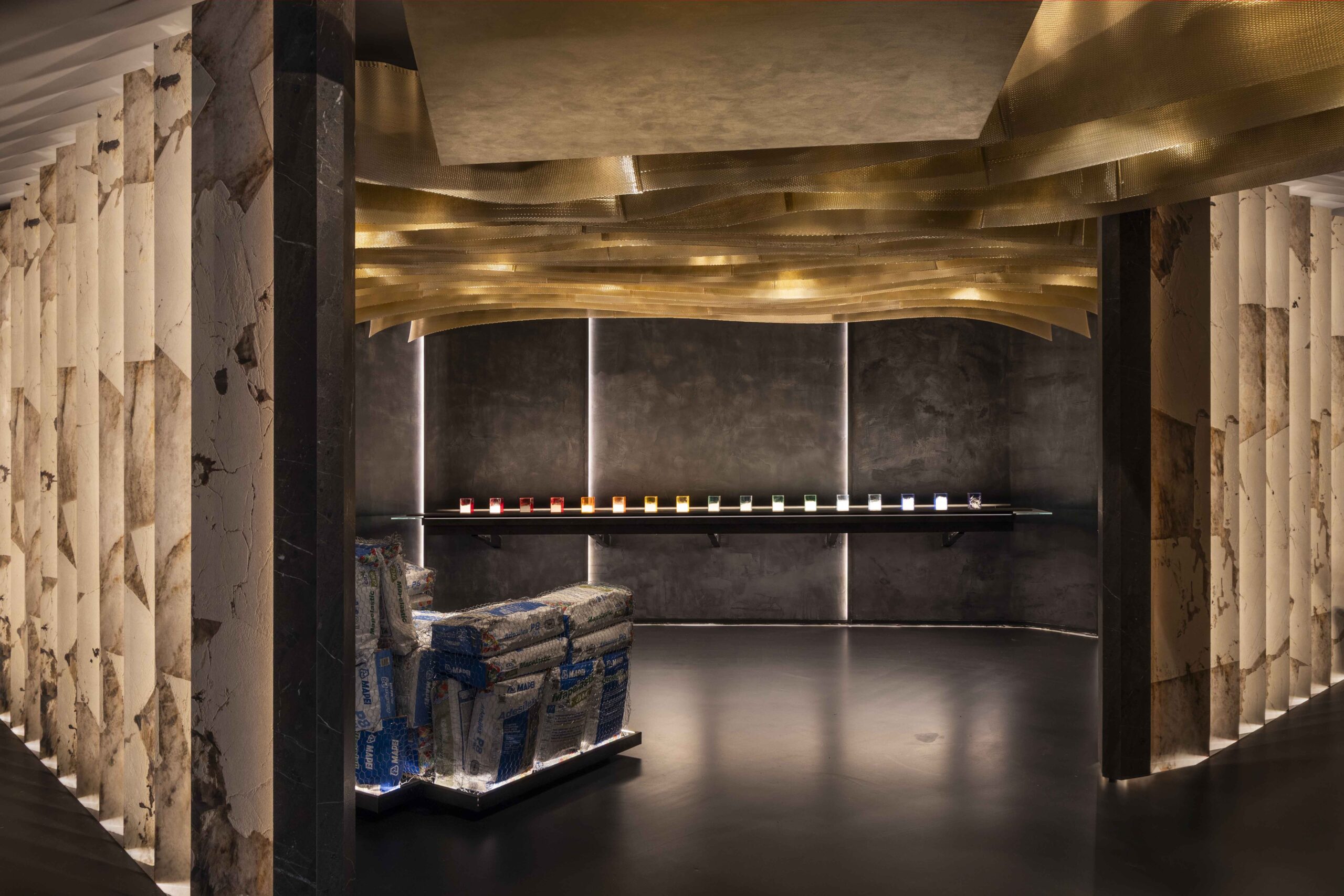
In the concept space “El valor de lo invisible”, designed by Cano y Escario Arquitectura for Mapei, Sapienstone Breccia Imperiale Natural is used for the central table top and also covers the inside walls, creating a material continuity between the horizontal and vertical surfaces. The full-height decorative panels in Patagonia by the brand FMG Fabbrica Marmi e Graniti vary the rhythm and enhance the installation without breaking its coherent composition.
PH:
Bahuhaus & Mapei: Jordi Canosa
Rebuelta Domecq & Matins Esudio: Nacho Uribesalazar